
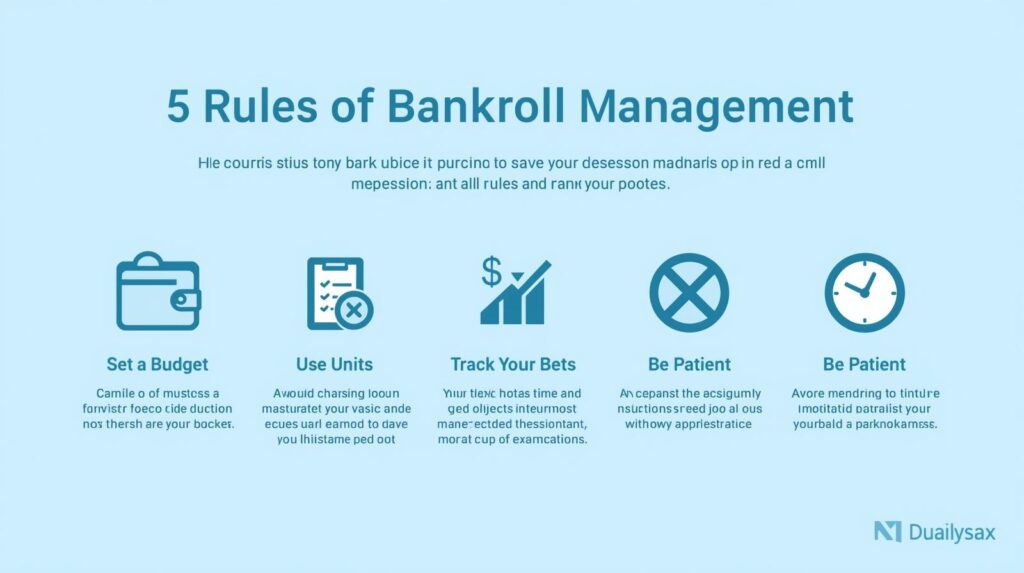
When starting out in sports betting, one of the most important skills you need is bankroll management. Many beginners focus only on picking the right team or understanding odds, but without proper money management, even the best predictions won’t save you from losses. Let’s break down how to manage your bankroll in simple steps.
What is a Betting Bankroll?
A bankroll is the amount of money you set aside just for betting. Think of it as your “betting wallet.” It should be money you can afford to lose without affecting your bills, food, or savings.
For example, if you decide that ₦20,000 (or $50) is your bankroll, you’ll use that amount to place bets and not add more when it’s gone.
Set a Budget
The first rule of bankroll management is: never bet with money you cannot afford to lose. Decide on your budget before you start betting.
👉 Example: If you earn ₦100,000 monthly, you might set aside ₦10,000 for betting. This keeps your hobby fun and safe without risking your financial stability.
Use Units for Betting
Professional bettors don’t just throw random amounts on bets. They use a unit system. A unit is a small percentage of your bankroll, usually between 1% and 5%.
👉 Example: If your bankroll is ₦20,000, then 1 unit = ₦200 (1%). If you’re very confident in a bet, you might place 2 units = ₦400.
This method protects you from losing all your money in a few bad games.
Track Your Bets
To improve as a bettor, you need to track your bets. Write down:
- The game you bet on
- The odds
- The amount staked
- Win or loss
You can use a simple Excel sheet, Google Sheets, or betting apps that help track performance. Over time, this shows which sports or bet types work best for you.
Avoid Chasing Losses
One of the biggest mistakes beginners make is chasing losses. After losing, they immediately bet more money to try and recover. This usually leads to bigger losses.
👉 Discipline is key: stick to your unit system, even after a loss. Remember, sports betting is a marathon, not a sprint.
Final Tips for Beginners
- Stay consistent with your staking strategy.
- Never borrow money to gamble.
- Focus on quality bets, not quantity.
- Be patient—long-term discipline leads to better results.
Conclusion
Bankroll management is the backbone of successful sports betting. By setting a budget, using units, tracking your bets, and avoiding emotional decisions, you’ll protect yourself from unnecessary losses and enjoy betting responsibly.
If you’re new to sports betting, you might also want to check out our beginner’s guide on How to Read and Understand Betting Odds to strengthen your foundation.